
Blog
How to Choose a High-Quality Knit Sweater: The Ultimate Buyer’s Guide | Hilogo

Learn how to choose a high-quality knit sweater. Hilogo’s guide covers essential materials, texture analysis, and durability tips to help you build a lasting wardrobe.
At Hilogo, we believe that great knitwear starts with thoughtful design and quality materials. In this guide, we’ll show you exactly how to choose a high-quality knit sweater—so you can shop smarter and build a wardrobe that lasts.
A good knit sweater is more than just a seasonal essential—it’s an investment in comfort, style, and longevity. But with so many options on the market, how do you tell the difference between a high-quality piece and one that will lose its shape after a few wears?
At Hilogo, we believe that great knitwear starts with thoughtful design and premium materials. We want you to feel confident in every purchase. In this guide, we’ll show you exactly how to choose a high-quality knit sweater—so you can shop smarter and build a wardrobe that lasts.
- Check the Material First: The Foundation of Quality
The material determines everything from softness and warmth to durability and price. If the material is poor, the construction doesn’t matter.
Here is a breakdown of common high-quality sweater materials and their key characteristics:
A. High-Quality Natural Fibers
Wool (e.g., Merino, Lambswool)
Why it’s good: Wool is the classic knitwear choice, offering exceptional warmth, breathability, and natural elasticity that helps it retain its shape.
Ideal for: Deep winter and everyday layering.
Cashmere
Why it’s good: Known for its signature soft hand-feel, cashmere is lightweight yet incredibly warm, providing a premium, luxurious experience.
Ideal for: Luxury essentials and sensitive skin.
Cotton Knit
Why it’s good: Breathable, durable, and generally easier to care for than wool, cotton is a versatile option.
Ideal for: Spring, fall, and milder climates.
B. High-Performing Blends
A partial blend (e.g., Wool + Nylon, Wool + Polyester) can sometimes be the best choice. While pure materials have their place, a strategic blend often enhances a sweater’s functionality.
Why they’re good: Blends can drastically improve durability and reduce the chances of stretching or losing shape.
Ideal for: Active wear, workwear, and those seeking the best balance of price and performance.
What to Look For When Checking Material
When you hold a potential sweater in your hands, pay close attention to the texture and feel:
✔ Soft but Structured: High-quality wool should feel soft but never overly “fluffy” or wispy (this can be a sign of future pilling).
✔ Even Texture: Run your hands over the surface. The knit should feel consistent and smooth, with no rough patches or unexpected thinner areas.
✔ No Chemical Smell: Quality natural fibers should have no distinct chemical smell, which often indicates harsh manufacturing processes.
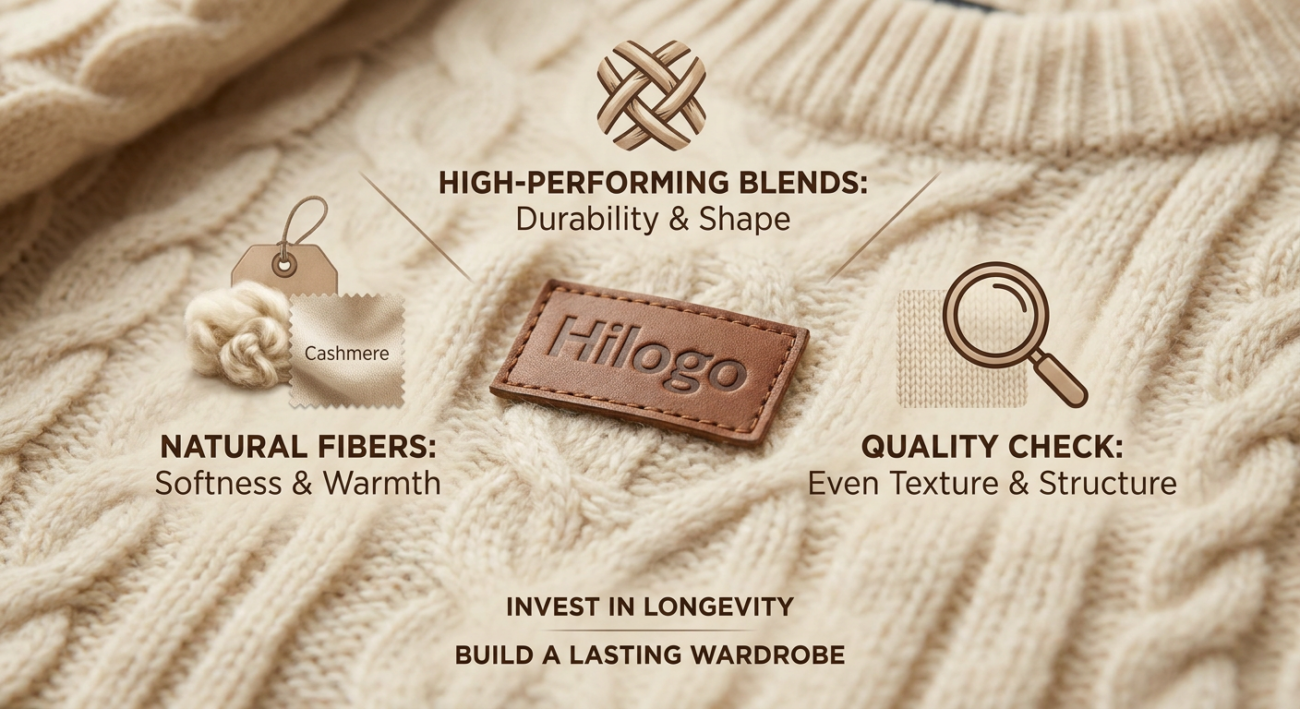
Ultimately, selecting a high-quality knit sweater is more than just a seasonal purchase; it is a conscious investment in your enduring style. By prioritizing the premium materials outlined in this guide—from the classic insulating warmth of merino wool to the strategic durability of high-performing blends—you are choosing longevity over fleeting trends. The craftsmanship evident in the light blue embroidered sweater pictured above perfectly exemplifies these principles. Its consistent weave and “soft but structured” feel demonstrate exactly the tactile quality and attention to detail you should always seek out when shopping. At Hilogo, our mission is to empower you with this knowledge, ensuring you move beyond fast fashion to embrace thoughtful design. By applying these critical insights regarding texture, composition, and feel, you can shop smarter and confidently build a curated wardrobe defined by comfort, resilience, and timeless elegance that will last season after season, ensuring you always look and feel your absolute best in every situation.